Key Features of Our Ion Channel Function Assays
- Healthy human large intestine tissues used
- Up to 8 test conditions available per donor allowing multiple drugs to be investigated in each experiment
- Depending upon the study design chosen, test articles can be tested in a cumulative concentration manner in each bath to understand the concentration response relationship
- Individual ion channels or mechanisms can be activated or inhibited via selective molecules to help elucidate the mechanism behind test article effects.
- Provides the closest method to testing your drug in the clinic
- Option to conduct studies in accordance with GLP
Methodology Summary
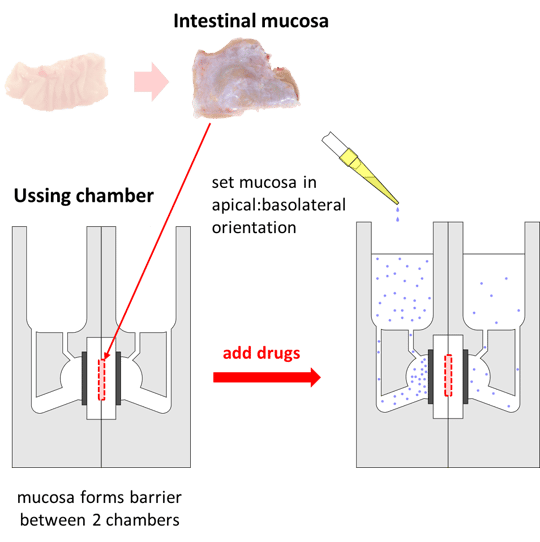
The Ussing chamber technique involves two chambers separated by intact tissue from the large intestine. Tissue integrity and viability are assessed through electrical resistance measurements (transepithelial electrical resistance, TEER), potential difference, and basal short circuit current (Isc). High-quality tissues are sourced ethically from surgical procedures or organ donors and maintained in a physiological saline solution during transport.
- Experimental Setup: Tissues are mounted in the Ussing chamber, equilibrated at 37°C, and solutions are gassed with 95% O2 / 5% CO2. Electrical parameters are continuously monitored, and TEER values are recorded every minute to monitor net ion flux and barrier integrity.
- Drug Testing: Drugs can be added to either one or both chambers.
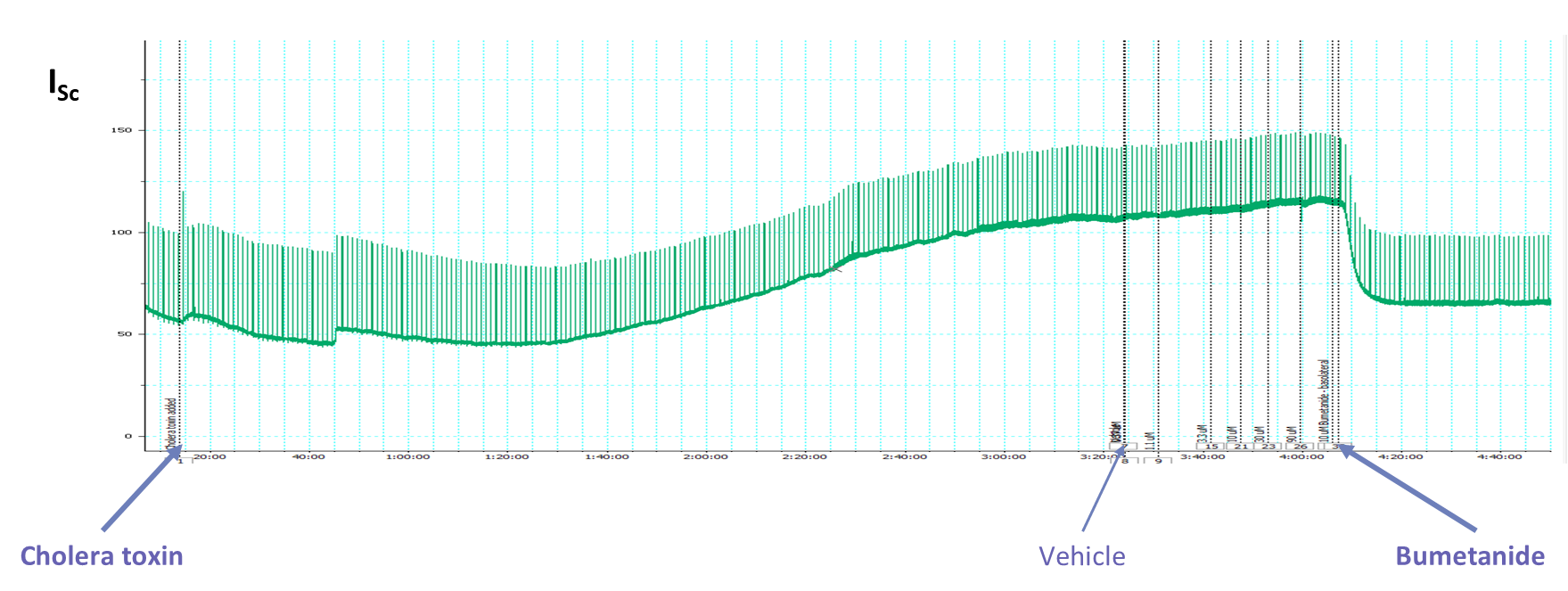
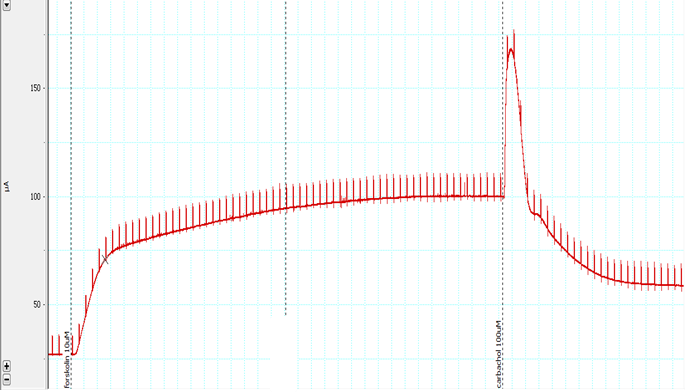
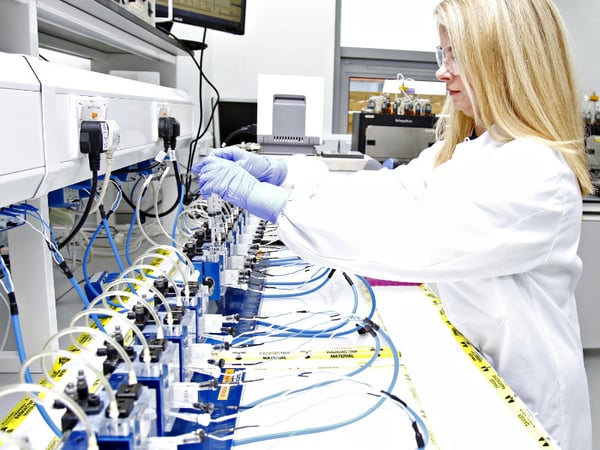
We provide solutions for studying ion channel function using our advanced Ussing chamber system. This tool detects changes in ion channel activity and exchange mechanisms, critical for understanding drug interactions within gastrointestinal tissues. By measuring short circuit current (Isc, µAmps), our assays predict the effects of your test articles on ion channel function, especially in the gastrointestinal tract, where ion channels regulate fluid secretion.