ADME/DMPK Assays
With respect to drug absorption, transport and metabolism, Ussing chambers are recognized as the gold standard in vitro method. By allowing investigations in living tissues, our ADME/DMPK assay models can accurately predict drug behavior in humans.
Oral bioavailability is dependent not only on liver metabolism but also, critically, on absorption through the gastrointestinal tract, where passive and active absorption and metabolism via brush-border enzymes are key. Alternative in vitro methods, such as Caco-2 cells or intestinal microsomes, are useful for either permeability or metabolism experiments, but not for both. This is because they don't express the correct levels of transporters or enzymes; only human fresh tissues reflect the true biology.
Moreover, as many animal species used in preclinical species differ significantly in their patterns of gastrointestinal permeability or metabolism, using human fresh gastrointestinal tissue avoids species differences when predicting oral bioavailability.
Key Features of Our Gastrointestinal Permeability Assays
- Up to 8 test conditions available per donor allowing multiple drugs to be investigated in each experiment
- Healthy human large intestine tissues used
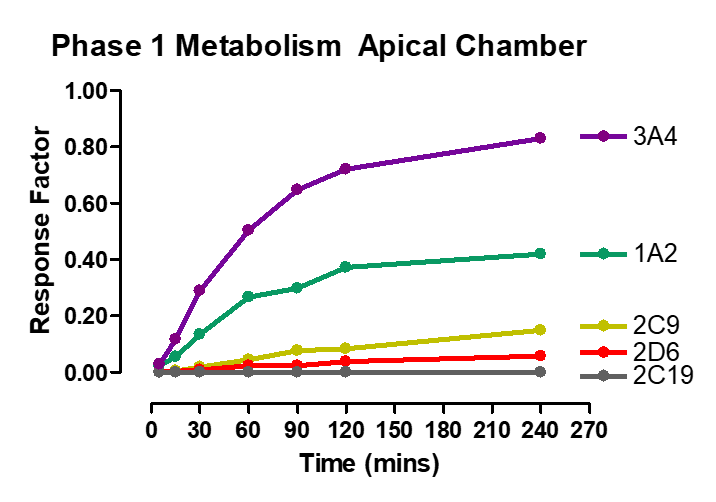
- Metabolism due to both Phase 1 and Phase 2 enzymes can be measured
- Provides the closest method to testing your drug in the clinic
- Option to conduct studies in accordance with GLP
Methodology Summary
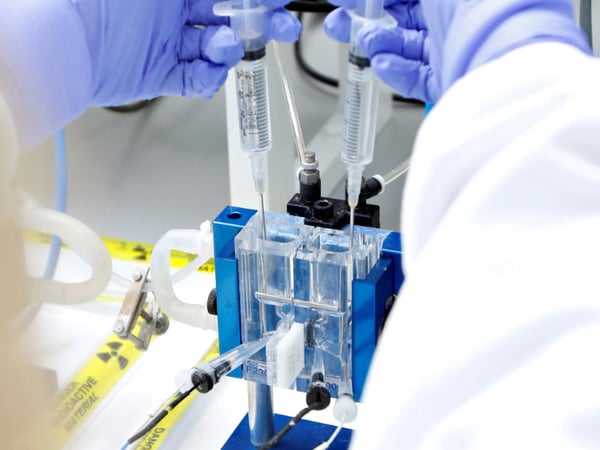
The Ussing chamber technique involves two chambers separated by intact tissue from the large intestine. Tissue integrity and viability are assessed through electrical resistance measurements (transepithelial electrical resistance, TEER), potential difference, and basal short circuit current (Isc). High-quality tissues are sourced ethically from surgical procedures or organ donors and maintained in a physiological saline solution during transport.
- Experimental Setup: Tissues are mounted in the Ussing chamber, equilibrated at 37°C, and solutions are gassed with 95% O2 / 5% CO2. Electrical parameters are continuously monitored, and TEER values are recorded every minute.
- Drug Testing: Drugs can be added to either chamber, and samples can be taken at various time points to assess both permeability and metabolic rates.
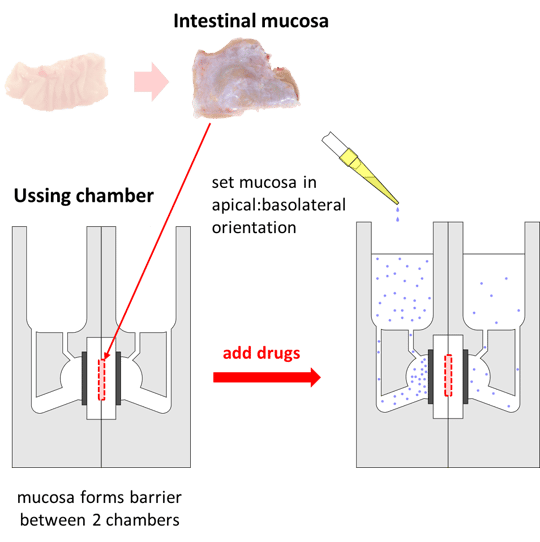
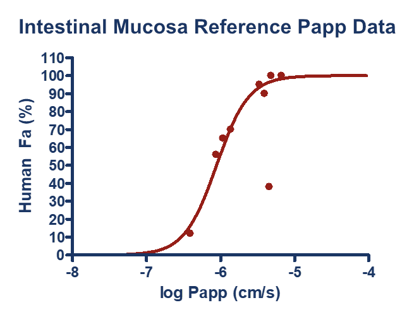
Add drug to apical chamber and measure appearance in basolateral chamber
= Absorption [Permeability]
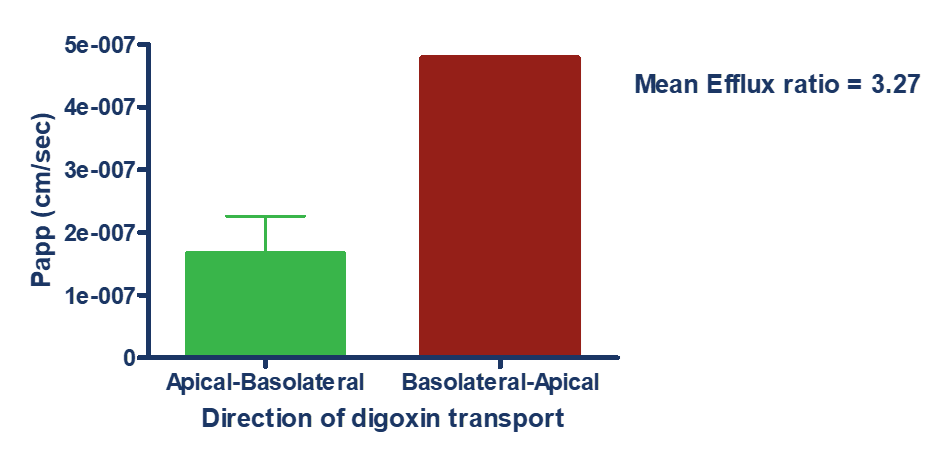
Compare apical → basolateral
vs. basolateral → apical transport
= Efflux
Measure appearance of broken-down drug metabolites
= Intestinal drug metabolism
.jpg?width=756&height=425&name=New%20Approach%20Methodologies%20(NAMs).jpg)