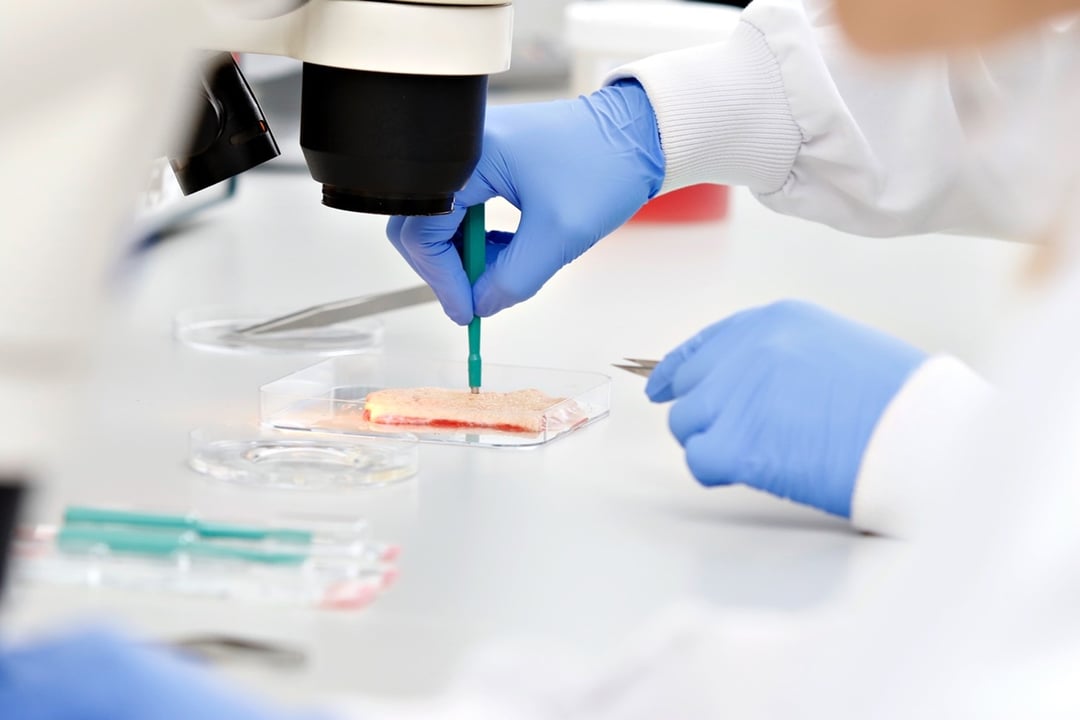
In the fast-evolving world of pharmaceutical research and development, human tissue-based drug discovery stands at the forefront of scientific innovation. As therapies become more sophisticated and demand for predictive human-relevant models increases, understanding the competitive landscape is essential for drug developers and research partners.1 In this blog, we break down direct vs. indirect competitors, highlight gaps in the market, and show where REPROCELL differentiates itself in delivering data-rich, disease-relevant human tissue solutions.
Direct vs. Indirect Competitors in Human Tissue-Based Drug Discovery
Direct competitors in the human tissue space are organizations offering human tissue assays, ex vivo models, organotypic cultures, or surgical explants for drug profiling.2 These companies often focus on:
- Human explants for efficacy and safety pharmacology
- Organ-on-chip systems simulating key physiological responses
- Induced pluripotent stem cell (iPSC)-derived models for mechanistic studies
- 3D tissue constructs and organoids for disease modeling
Examples include providers of human tumor slice assays, skin/dermal models, airway tissue systems, and cardiac explants that support compound testing.
Indirect competitors, on the other hand, are players whose solutions intersect with human tissue work but do not directly replace it. These include:
- Animal models and traditional cell lines (e.g., murine studies, immortalized cell systems)
- Purely computational or AI prediction platforms that infer human outcomes from in silico models
- Bioprinting companies using engineered tissues that are yet to demonstrate broad translational predictivity for human disease endpoints3
While these indirect approaches contribute valuable context or scale, they often fall short in replicating the complexity and human physiology needed to de-risk clinical outcomes and improve translational success.
Gaps in the Market: Opportunities for Innovation
Even as human tissue-based models gain traction, important gaps remain where current offerings either lack biological relevance or scalability:4
1. Engineered Tissue for Complex Chronic Diseases (e.g., IBD & IPF)
Many engineered tissue platforms struggle to replicate the multifaceted pathophysiology of chronic inflammatory disorders such as inflammatory bowel disease (IBD) and idiopathic pulmonary fibrosis (IPF).5 These conditions involve intricate cellular interactions, immune components, biomechanical stress, and remodeling that engineered systems often can’t capture.
2. Tissue Complexity vs. Throughput Trade-Offs
High-throughput platforms excel in screening large compound libraries but often do so at the expense of biological depth. Conversely, highly complex ex vivo tissues provide rich mechanistic insights but cannot support the scale many developers need for early screening funnels.6
3. Lack of Standardized, Human-Relevant Disease Endpoints
Across the industry, definitions of meaningful disease biomarkers and endpoints vary, making cross-platform comparisons and regulatory interpretation challenging. This gap slows adoption and obscures what “predictive success” means in practice.7
How REPROCELL Differentiates Itself
REPROCELL stands apart by bridging the critical divide between biological relevance and disease-specific insight, without compromising on translational impact.
✔ Human Tissue, Human Complexity
REPROCELL’s core strength is rooted in the use of fresh human tissue, maintaining the native architecture, cell–cell interactions, and disease characteristics that engineered systems often lack. This delivers:
- More predictive pharmacology
- Insights into human-relevant mechanisms
- Better alignment with clinical outcomes
✔ Disease-Specific Models with Rich Data Outputs
Rather than generic tissues, REPROCELL focuses on disease-pertinent assays, from IBD-affected colon explants to airway tissues and other clinically relevant systems, capturing endpoints that reflect true pathophysiology.
✔ “Data-Rich, Disease-Relevant, Human” Over Throughput Alone
While many competitors promote throughput as a differentiator, REPROCELL emphasizes quality and context. For us, meaningful data is not measured in sheer numbers but in translational value, enabling smarter decision-making for drug developers.
✔ Flexible Integration Across Drug Discovery Stages
Whether a project is in early lead selection or deeper mechanism exploration, REPROCELL’s platform can adapt, offering both targeted, hypothesis-driven studies and broader profiling workflows.
Looking Ahead: Evolving the Landscape
As drug discovery continues to shift toward more human-centric approaches, there is an increasing demand for models that can better reflect the complexity of human biology. Specifically, the market will require systems capable of capturing multicellular disease mechanisms, integrating biomarkers that align closely with clinical endpoints, and delivering robust, reproducible, and translationally relevant readouts.9 At the same time, these models must strike a careful balance between biological complexity and practical scalability to ensure they remain both scientifically valuable and operationally feasible.
REPROCELL is strategically positioned to lead this evolution, supporting partners with assays that matter, data that translates, and insights that fuel confident decisions.
Conclusion
The competitive landscape for human tissue-based drug discovery is diverse and rapidly maturing. Direct competitors bring value in engineered or high-throughput models, while indirect competitors support complementary domains. Yet, gaps in disease complexity, relevance, and data quality remain.
REPROCELL’s differentiator is clear: a commitment to human tissue systems that deliver disease relevance and translational insight, helping de-risk development and power smarter therapeutic decisions.
If you’d like to explore how REPROCELL’s human tissue platforms can support your next project, get in touch with our team to learn more.
References
1. D. Taylor, in Pharmaceuticals in the Environment, ed. R. E. Hester and R. M. Harrison, The Royal Society of Chemistry, 2015, pp. 1-33.
2. “5 Companies That Are Advancing Research Using Ex Vivo Models.” Scispot Blog, Scispot, 30 June 2025, www.scispot.com/blog/5-companies-that-are-excelling-in-research-using-ex-vivo-models.
3. Lee SJ, Jeong W, Atala A. 3D Bioprinting for Engineered Tissue Constructs and Patient-Specific Models: Current Progress and Prospects in Clinical Applications. Adv Mater. 2024 Dec;36(49):e2408032. doi: 10.1002/adma.202408032. Epub 2024 Oct 17. PMID: 39420757; PMCID: PMC11875024.
4. “Bridging the Gap: Creating More Physiologically Relevant Human Cell Models.” Cell Science from Technology Networks, www.technologynetworks.com/cell-science/articles/bridging-the-gap-creating-more-physiologically-relevant-human-cell-models-396896. Accessed 30 Mar. 2026.
5. Uijung Yong, Jihwan Kim, Jinah Jang, Biohybrid-engineered tissue platforms: bridging the gap in tissue engineering, Trends in Biotechnology, Volume 43, Issue 12, 2025, Pages 3020-3039, ISSN 0167-7799, https://doi.org/10.1016/j.tibtech.2025.05.018.
6. Szczesny, S. E. (2020). Ex vivo models of musculoskeletal tissues. Connective Tissue Research, 61(3–4), 245–247. https://doi.org/10.1080/03008207.2020.1742418
7. Califf RM. Biomarker definitions and their applications. Exp Biol Med (Maywood). 2018 Feb;243(3):213-221. doi: 10.1177/1535370217750088. PMID: 29405771; PMCID: PMC5813875.
8. Califf RM. Biomarker definitions and their applications. Exp Biol Med (Maywood). 2018 Feb;243(3):213-221. doi: 10.1177/1535370217750088. PMID: 29405771; PMCID: PMC5813875.
9.“Beyond Animals: Revolutionizing Drug Discovery with Human-Relevant Models.” Wyss Institute, 10 July 2025, wyss.harvard.edu/news/beyond-animals-revolutionizing-drug-discovery-with-human-relevant-models/.