StemEdit Gene-Edited iPSCs

Brand: StemEdit by Stemgent® (REPROCELL®)

High-quality HLA knockout iPSC lines were developed using our state-of-the-art genome editing technology, utilizing an AI-enhanced nuclease system. This editing system is also well-suited for clinical gene-editing projects.

NEW OFFER: Parental iPSC Line + StemEdit Gene-Edited Clones

The clinical parental iPSC line used to develop our StemEdit hypoimmune iPSC lines is now available in an affordable bundle together with the corresponding gene-edited clones.

Interested? Contact us directly at info-us@reprocellusa.com for pricing and availability.

License included

Research • Clinical • Commercial

The applicable license for research, clinical, and commercial use is included with StemEdit hypoimmune iPSC lines—no separate or additional license for the gene editing platform is required, subject to the applicable terms of use and service agreement.

Please note: Users remain responsible for ensuring compliance with applicable third-party intellectual property covering guide RNAs, delivery methods, and downstream applications.


NOTE:
These iPSC cell lines are developed and supplied for Research Use Only (RUO). They are not intended for clinical or therapeutic applications. However, this clone has a clinical-grade counterpart available that is suitable for clinical gene editing and downstream clinical development. Contact Us for more information.


See also:


StemEdit Gene-Edited iPSC Lines:

RCRP051

Human iPS Cells established from fibroblasts, reprogrammed with REPROCELL's StemRNA Reprogramming technology, with knockout in the CIITA (HLA Class II) genes.
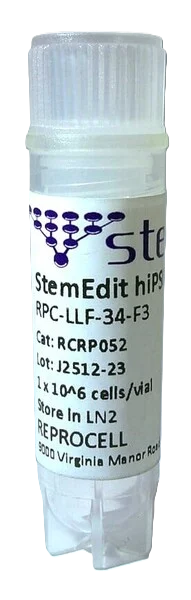
RCRP052

Human iPSCs established from fibroblasts, reprogrammed with REPROCELL's Clinical StemRNA Reprogramming technology, with double knockout in the B2M (HLA Class I) and CIITA (HLA Class II) genes.
Brand: StemEdit

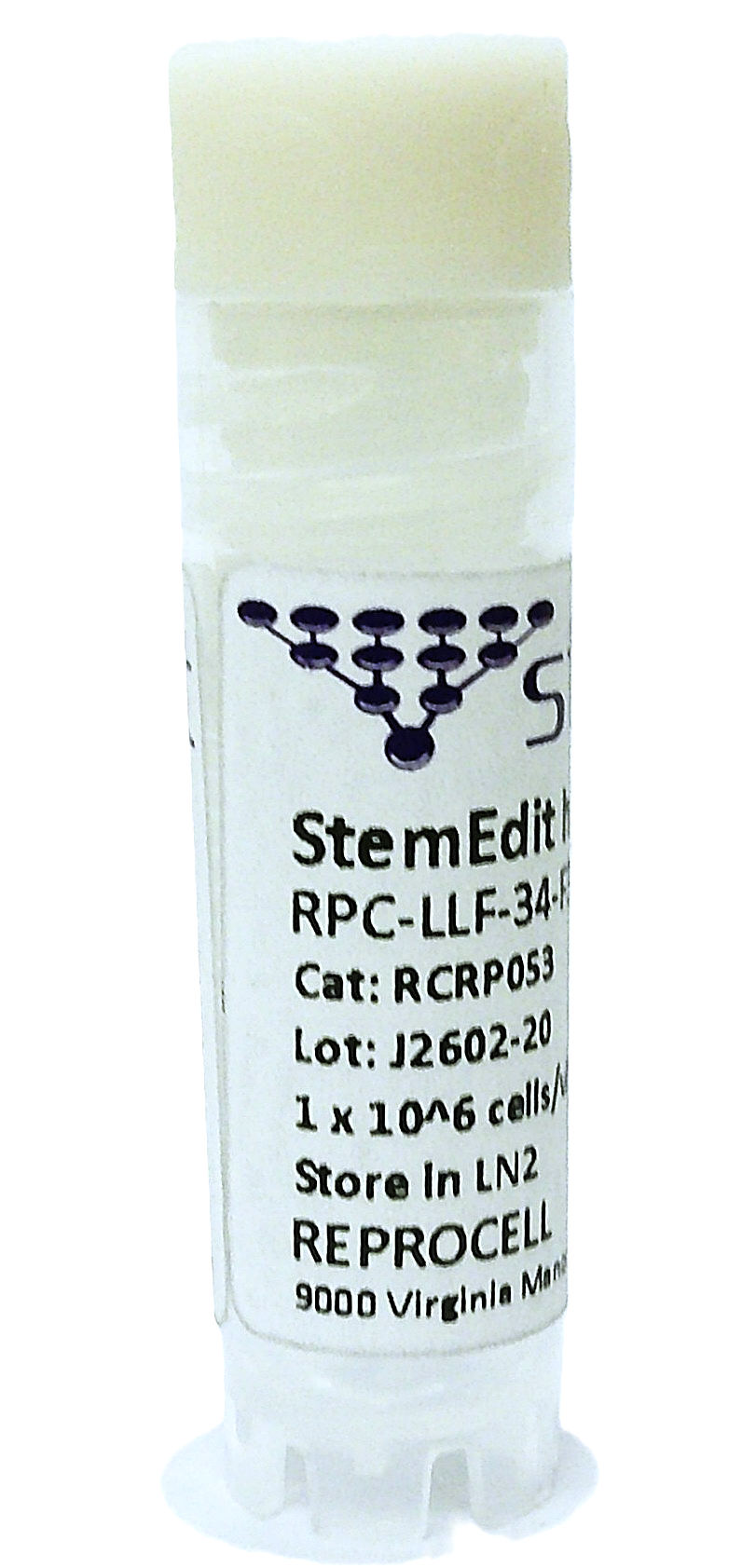
RCRP053

Human iPSCs established from fibroblasts, reprogrammed with REPROCELL's Clinical StemRNA Reprogramming technology, with a knockout of both alleles of the B2M (HLA Class I) gene.