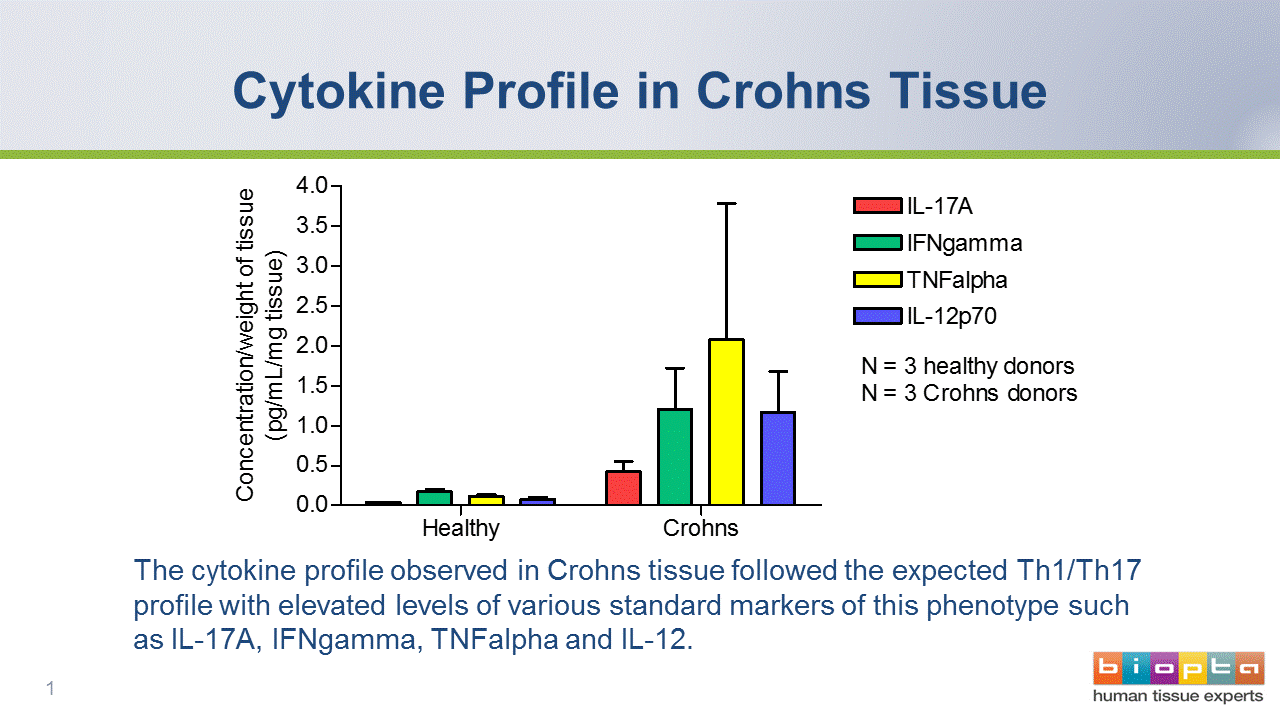
Inflammatory bowel disease (IBD), including Crohn's disease (CD) and ulcerative colitis (UC), remains a substantial clinical challenge despite major advances in treatment. Anti-tumor necrosis factor (anti-TNF) therapies have transformed IBD management, yet some patients do not respond adequately or lose response over time. For these patients, persistent inflammation can mean ongoing symptoms, repeated treatment changes and continued risk of complications. Therapies targeting additional pathways have therefore expanded the available options. Selective interleukin-23 (IL-23) inhibitors are now established treatments, while antibodies targeting tumor necrosis factor-like cytokine 1 A (TL1A) are under clinical investigation. These advances also highlight a broader research priority: understanding why treatment responses differ and using that knowledge to guide therapeutic development and selection.1, 2
Why Are Additional Therapies Needed?
Anti-TNF therapies remain important treatments for IBD, but no single therapeutic mechanisms provide durable disease control for every patient. An inadequate response may require treatment optimization or a switch to another mechanism, while uncontrolled disease and its complications can ultimately necessitate surgery Developing additional therapies therefore remains essential, even as the number of available treatments grows.3
The need extends beyond suppressing active inflammation. Established intestinal fibrosis, particularly in fibrostenotic Crohn’s disease, remains difficult to treat medically. Although controlling inflammation can improve the inflammatory component of a stricture, established fibrosis may persist. Preclinical research indicates that fibrotic processes can persist independently of ongoing inflammation, supporting the investigation of mechanisms that influence tissue remodeling as well as inflammatory activity.4
IBD also varies considerably between patients. Differences in disease location, phenotype, treatment history, and tissue biology create a strong rationale for investigating both new mechanisms and more informative approaches to treatment selection. Human tissue studies offer one way to explore this variability directly within the intestinal disease environment.5
IL-23: An Established Target with Continuing Research Opportunities
IL-23 helps sustain pathogenic immune responses in the intestinal mucosa. Its effects include supporting inflammatory T-cell populations, such as Th17 cells, although its role in IBD involves multiple immune and stromal cell populations. Human mechanistic studies have also associated increased IL-23 signaling with resistance to anti-TNF therapy in Crohn’s disease, providing a biological rationale for targeting this alternative pathway.6, 7
Mirikizumab, risankizumab, and guselkumab selectively target the p19 subunit of IL-23. All three are approved in the United States for adults with moderately to severely active UC and CD. Clinical trials have demonstrated benefits in clinical remission and endoscopic outcomes, with UC studies also reporting improvements in histologic measures.6, 7
These therapies provide additional options for patients whose disease has not been adequately controlled by previous treatments. However, response remains variable, including among patients previously exposed to advanced therapies. Understanding the biological basis of that variation is an important next step toward more informed treatment selection.6, 7
TL1A: A Potential Link Between Inflammation and Fibrosis
TL1A is a TNF superfamily cytokine that signals through death receptor 3 (DR3). Human genetic findings, intestinal tissue studies and experimental research support its involvement in IBD pathogenesis. Investigational antibodies targeting this pathway include tulisokibart, duvakitug and afimkibart.8
One reason for interest in TL1A is its potential role in intestinal fibrosis. In mouse models of chronic colitis, TL1A blockade reduced inflammation and reversed established colonic fibrosis. These findings provide a rationale for investigating antifibrotic effects in patients, but they do not establish that TL1A blockade can prevent or reverse intestinal strictures in clinical practice.9, 10 Clinical trials have provided evidence of anti-inflammatory activity. In the randomized phase 2 ARTEMIS UC trial, clinical remission at week 12 occurred in 26% of patients receiving tulisokibart compared with 1% receiving placebo in cohort 1, the primary analysis population.
The phase 2b RELIEVE UCCD trial evaluated duvakitug in separate UC and CD cohorts. At week 14, clinical remission occurred in 48% of patients with UC receiving the 900 mg dose compared with 20% receiving placebo. In CD, endoscopic response occurred in 48% versus 13%, respectively. These findings support further development, but the UC and CD results reflect different primary endpoints and should not be directly compared.11
Results across the investigational class have not been uniformly positive. Afimkibart showed efficacy signals in the phase 2b TUSCANY-2 UC trial, but the differences from placebo for its primary endpoint of clinical remission by total Mayo score at week 14 did not reach statistical significance. Continued investigation is needed to establish the efficacy, long term safety and differences in clinical performance among individual TL1A directed therapies.12
JAK Inhibitors and Oral Targeted Therapies
Janus kinase (JAK) inhibitors modulate intracellular signaling downstream of multiple cytokine receptors, offering an oral alternative to injectable biologics. Upadacitinib, for example, is approved in the United States for adults with moderately to severely active UC or CD who have had an inadequate response or intolerance to one or more TNF blockers. When TNF blockers are clinically inadvisable, the US label permits its use after treatment with at least one approved systemic therapy. 13
These treatments also illustrate why efficacy and safety must be considered together. US prescribing information for upadacitinib includes a boxed warning concerning serious infections, malignancy major adverse cardiovascular events, thrombosis and mortality. Patient selection and monitoring are therefore central to its use.
For drug developers, continued innovation in small molecules raises an important question: how can modulation of intracellular pathways deliver sustained disease control with a favorable benefit-risk balance?
Human Intestinal Tissue as a Bridge to Therapeutic Development
The growing number of mechanisms creates opportunities for patients, but it also poses a challenge for developers: conventional efficacy models may not fully explain why one pathway is active in one patient and less relevant in another. Addressing that question requires experimental systems that can evaluate candidate therapies within the complex cellular environment of human intestinal disease. Human tissue obtained from endoscopic biopsies or surgical resections can provide a valuable complement to animal models and isolated cell systems.
Under suitable culture conditions, intestinal explants retain aspects of native architecture and local cellular interactions allowing researchers to investigate inflammatory responses and drug effects within a human tissue environment. Measuring inflammatory mediator release and other assay specific endpoints can help compare candidate compounds, characterize pharmacodynamic effects, and investigate variation in responses among donors. With appropriate controls and assessment of tissue viability, these findings can inform compound prioritization and design subsequent studies.
REPROCELL supports this work through fresh human IBD tissue assays that evaluate anti-inflammatory drug effects in organocultures from donors with Crohn’s disease or ulcerative colitis. Candidate compounds can be assessed alongside reference treatments to characterize their effects on inflammatory mediator release in disease-relevant human tissue.
While human tissue models do not capture every aspect of disease or systemic drug exposure, they provide valuable insights into local tissue responses. Combined with molecular profiling and clinical information, these findings can strengthen mechanistic research and support the development of candidate biomarkers for precision medicine. Further clinical studies will help establish whether and how ex vivo responses can inform treatment selection.
Toward Precision Medicine in IBD
A growing therapeutic repertoire creates a greater need to identify which treatment is most likely to benefit a particular patient. Precision medicine aims to connect clinical characteristics with molecular and functional evidence, helping move treatment selection toward a more biologically informed approach.
Human tissue research can contribute to this effort by linking pathway activity and experimental drug responses with donor characteristics. These relationships may help identify candidate biomarkers or patient subgroups for further investigation. This approach connects a proposed therapeutic mechanism with its functional effects in human disease tissue.
However, a biomarker associated with disease biology does not necessarily predict benefit from a specific treatment strategy. Prospective studies must establish whether biomarker-guided use improves clinical decisions. In the PROFILE trial in newly diagnosed Crohn’s disease, the tested prognostic biomarker did not identify differential benefit from the treatment strategies studied, although the trial found substantially better outcomes with early-top down therapy than with accelerated step-up treatment, The result underscores both the importance of rigorous biomarker validation and the need to distinguish biomarker performance from the comparative effectiveness of the treatment strategies being evaluated.14
Integrating human tissue assays, molecular profiling and clinical outcomes offers a promising research route toward precision medicine. Its success will depend on reproducible methods and evidence that the resulting insights improve treatment selection and patient outcomes.
Conclusion
Advances beyond TNF inhibition have expanded treatment options for Crohn’s disease and ulcerative colitis but substantial unmet need remains. Approved IL-23 and JAK inhibitors offer alternative mechanisms for controlling inflammation, while TL1A-directed therapies may have relevance to both inflammatory and fibrotic pathways. The central challenge is no longer only to develop additional therapies, but also to determine which biological mechanisms are most relevant to individual patients.
Human intestinal tissue research can help connect therapeutic mechanism with the variability of human disease, supporting drug development and the investigation of candidate predictive biomarkers. Together with prospective clinical validation, these approaches may help translate an expanding treatment repertoire into better informed treatment selection and more durable disease control.
References
1. Muzammil MA, Fariha F, Patel T, Sohail R, Kumar M, Khan E, Khanam B, Kumar S, Khatri M, Varrassi G, Vanga P. Advancements in Inflammatory Bowel Disease: A Narrative Review of Diagnostics, Management, Epidemiology, Prevalence, Patient Outcomes, Quality of Life, and Clinical Presentation. Cureus. 2023 Jun 28;15(6):e41120. doi: 10.7759/cureus.41120. PMID: 37519622; PMCID: PMC10382792.
2. Horiuchi, I., Horiuchi, A. & Sugimoto, K. Selective IL-23 inhibitors in ulcerative colitis: current evidence and perspectives for multimodal personalized treatment: a narrative review. J Gastroenterol 61, 1207–1216 (2026). https://doi.org/10.1007/s00535-026-02429-x
3. Juan Liu, Bin Di, Li-li Xu, Recent advances in the treatment of IBD: Targets, mechanisms and related therapies,
Cytokine & Growth Factor Reviews, Volumes 71–72, 2023, Pages 1-12, ISSN 1359-6101, https://doi.org/10.1016/j.cytogfr.2023.07.001.
4. Shih DQ, Zheng L, Zhang X, Zhang H, Kanazawa Y, Ichikawa R, Wallace KL, Chen J, Pothoulakis C, Koon HW, Targan SR. Inhibition of a novel fibrogenic factor Tl1a reverses established colonic fibrosis. Mucosal Immunol. 2014 Nov;7(6):1492-503. doi: 10.1038/mi.2014.37. Epub 2014 May 21. PMID: 24850426; PMCID: PMC4205266.
5. Fangjia Hao, Wenyi Zhu, Jiaying Zheng, Siew Chien Ng, Jingwan Zhang, Geographic diversity in inflammatory bowel disease genetics and microbiome, Trends in Microbiology, Volume 33, Issue 11, 2025, Pages 1196-1211, ISSN 0966-842X, https://doi.org/10.1016/j.tim.2025.06.017.
6. Parisio L, Cuccia G, Giudice A, Carrabetta F, Del Gaudio A, Privitera G, Carbone L, Spagnuolo R, Pugliese D. Interleukin 23: Pathogenetic Involvement and Therapeutic Target for Ulcerative Colitis. Journal of Clinical Medicine. 2025; 14(13):4590. https://doi.org/10.3390/jcm14134590
7. Horiuchi, I., Horiuchi, A. & Sugimoto, K. Selective IL-23 inhibitors in ulcerative colitis: current evidence and perspectives for multimodal personalized treatment: a narrative review. J Gastroenterol 61, 1207–1216 (2026). https://doi.org/10.1007/s00535-026-02429-x
8. Sands M.D. et al. Phase 2 Trial of Anti-TL1A Monoclonal Antibody Tulisokibart for Ulcerative Colitis. Journal of Medicine, Vol. 391, No. 12. 10.1056/NEJMoa2314076
9. Raymond Fueng-Hin Liang, Cecilia Lina Pugliano, Robert Hughes, Snehali Majumder, Antonio Lo Bello, Marietta Iacucci, Subrata Ghosh, TL1A as a therapeutic renaissance in inflammatory bowel disease: a systematic review from molecular mechanisms to clinical translation, Journal of Crohn's and Colitis, Volume 20, Issue 5, May 2026, jjag039, https://doi.org/10.1093/ecco-jcc/jjag039
10. Solitano V, Jairath V, Ungaro F ...TL1A inhibition for inflammatory bowel disease treatment: From inflammation to fibrosis Med, 2024; 5, 386-400.
11. Reinisch W, Stepek D, Kempinski R, Danese S, Sands BE, Ratiu-Duma B, Singh R, Levine P, Barkay H, Gross N, Abrams K, Jairath V. Efficacy and safety of duvakitug in patients with ulcerative colitis (RELIEVE UCCD): a phase 2b, randomised, placebo-controlled trial. Lancet Gastroenterol Hepatol. 2026 Sep;11(9):775-785. doi: 10.1016/S2468-1253(26)00120-2. Epub 2026 Jul 16. PMID: 42462750.
12. Danese S, Allegretti JR, Schreiber S, Peyrin-Biroulet L, Jairath V, D'Haens G, Kierkuś J, Leong RW, Yarur AJ, Vincent MS, Banerjee A, Chandra DE, Peeva E, Neelakantan S, Hung KE, McBride JM, Bojic D, Lasch K, Schiffman C, Feagan BG. Anti-TL1A antibody, afimkibart, in moderately-to-severely active ulcerative colitis (TUSCANY-2): a multicentre, double-blind, treat-through, multi-dose, randomised, placebo-controlled, phase 2b trial. Lancet Gastroenterol Hepatol. 2025 Oct;10(10):882-895. doi: 10.1016/S2468-1253(25)00129-3. Epub 2025 Jul 21. PMID: 40706613.
13. “DailyMed - RINVOQ- Upadacitinib Tablet, Extended Release RINVOQ- Upadacitinib Solution.” U.S. National Library of Medicine, National Institutes of Health, dailymed.nlm.nih.gov/dailymed/drugInfo.cfm?setid=2966aec7-2ef0-923c-d8ff-fe1a957bf095.
14. Noor NM, Lee JC, Bond S, Dowling F, Brezina B, Patel KV, Ahmad T, Banim PJ, Berrill JW, Cooney R, De La Revilla Negro J, de Silva S, Din S, Durai D, Gordon JN, Irving PM, Johnson M, Kent AJ, Kok KB, Moran GW, Mowat C, Patel P, Probert CS, Raine T, Saich R, Seward A, Sharpstone D, Smith MA, Subramanian S, Upponi SS, Wiles A, Williams HRT, van den Brink GR, Vermeire S, Jairath V, D'Haens GR, McKinney EF, Lyons PA, Lindsay JO, Kennedy NA, Smith KGC, Parkes M; PROFILE Study Group. A biomarker-stratified comparison of top-down versus accelerated step-up treatment strategies for patients with newly diagnosed Crohn's disease (PROFILE): a multicentre, open-label randomised controlled trial. Lancet Gastroenterol Hepatol. 2024 May;9(5):415-427. doi: 10.1016/S2468-1253(24)00034-7. Epub 2024 Feb 22. Erratum in: Lancet Gastroenterol Hepatol. 2025 Aug;10(8):e10. doi: 10.1016/S2468-1253(25)00203-1. PMID: 38402895; PMCID: PMC11001594.
About the author
Ella Cutter, Digital Marketing Manager, REPROCELL Europe
Hailing from an American background in journalism and publishing, she likes to read, run and try new restaurants in her free time. Connect with her on LinkedIn: www.linkedin.com/in/ellacutter.
Subjects we write about
- 3D Cell Culture
- Cell Culture
- Central Lab Services
- Clinical Capabilities
- Disease Modeling
- Drug Discovery
- Gene Editing
- Genomic Services
- GMP
- Human Tissue Samples
- Human Tissue Testing
- IBD
- Life Sciences
- Master Cell Banks
- Neurons
- Oligonucleotide Synthesis
- Pharmacology-AI
- Precision Medicine
- Product Catalog
- Regenerative Medicine
- Respiratory Disease
- Safety Pharmacology
- Skin Disease
- Stem Cells