Investigating CCR3-Mediated Airway Hyperresponsiveness in Human Lung Tissue
Background
Bronchoconstriction in asthma is commonly driven by cholinergic stimuli such as methacholine or carbachol acting on airway smooth muscle. Although CC chemokine receptor 3 (CCR3) has traditionally been studied for its role in eosinophil recruitment and allergic inflammation, emerging evidence suggests that a CCR3 may also modulate airway smooth muscle contractility through non-inflammatory mechanisms.
In a Phase IIA study reported in a European Respiratory Society conference abstract, treatment with the CCR3-selective inhibitor AXP1275 was associated with reduced methacholine responsiveness in patients with mild-to-moderate asthma. The same report described reduced carbachol-induced bronchoconstriction in ex vivo human lung tissue following CCR3 inhibition and presented evidence that
CCR3 was reported to co-localise and forms heterodimers with muscarinic M3 receptors, providing evidence that receptor interaction may enhance cholinergic calcium signalling.
The Challenge
Although emerging clinical and mechanistic evidence suggested that CCR3 may influence airway smooth muscle function, several important translational questions remained:
- Does CCR3 directly regulate airway smooth muscle contractility in human lung tissue?
- Does CCR3 directly enhance cholinergic airway contraction independently of its established role in eosinophilic inflammation?
- Is pharmacological inhibition of CCR3 effective under both physiological and disease-relevant conditions?
Addressing these questions required a human-relevant functional model capable of isolating and quantifying the direct effects of CCR3 signalling on contractility.
Our Approach
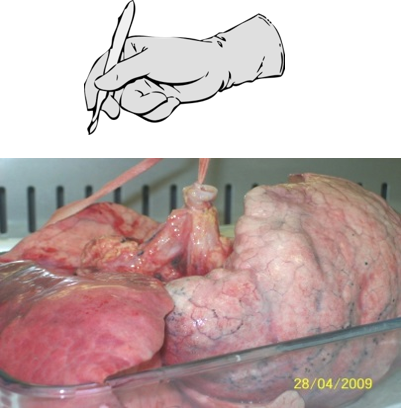
REPROCELL designed a human ex vivo organ bath study using native lung tissue to directly investigate the functional role of CCR3 in regulating airway contractility.
This approach enabled:
- Direct measurement of airway smooth muscle contractile responses under controlled experimental conditions
- Mechanistic evaluation of the effects of the CCR3 activation and pharmacological inhibition on airway tone
- Assessment of CCR3 function across healthy and disease-relevant tissue states to determine whether its functional role is preserved across tissue types
Key Results
CCR3 activation enhanced cholinergic airway constriction, providing direct functional evidence that CCR3 regulates airway smooth muscle contractility in human lung tissue. Conversely, blockade of CCR3 with small molecule CCR3 inhibitors reduced carbachol-induced hyperresponsiveness following eotaxin exposure. These effects were observed in both healthy and asthmatic tissue and persisted in epithelium-denuded airways, supporting a smooth muscle–intrinsic mechanism. Importantly, the contractile responses occurred independently of eosinophil-mediated inflammatory mechanisms, indicating a direct role for CCR3 in regulating airway tone.
These findings were consistent with mechanistic evidence from in vitro experiments demonstrating functional coupling between CCR3 and muscarininc M3 receptors, resulting in enhanced cholinergic calcium signalling.
Translational Insight
This study provided clear functional evidence that CCR3 contributes to airway hyperresponsiveness through direct effects on airway smooth muscle, extending its potential role beyond eosinophil-mediated inflammation.
Using native human lung tissue, REPROCELL was able to:
- Translate emerging clinical observations into mechanistic pharmacological evidence
- Demonstrate that CCR3 can directly modulate airway smooth muscle contractility and airway tone
- Strengthen the rationale for targeting CCR3 as a therapeutic strategy that may complement approaches focused on eosinophilic inflammation
Impact
This study enabled direct evaluation of a novel respiratory mechanism in native human tissue, providing functional evidence to support the biological relevance of CCR3 in airway contractility. By generating robust mechanistic data in a clinically relevant human tissue model, REPROCELL helped de-risk the biological target, strengthen understanding of CCR3 biology and support further investigation of CCR3 as a therapeutic target.
Clinical Translation
The mechanistic data generated in this study enhanced the Sponsor's understanding of CCR3 biology by demonstrating its role in regulating airway smooth muscle contractility, supporting the translational relevance of human ex vivo lung models and informing the evaluation of CCR3 inhibition as a viable therapeutic approach for respiratory disease.