Frequently Asked Questions About REPROCELL's
StemEdit Gene Editing Service

A. Platform Overview
1. What is StemEdit Gene Editing Service?
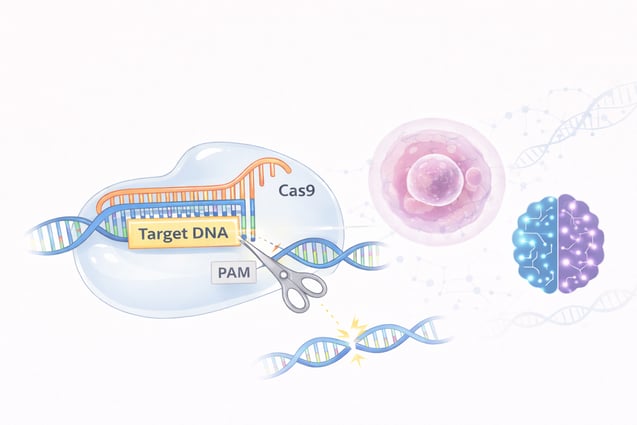
StemEdit is REPROCELL's advanced gene editing platform for engineering iPSCs. It incorporates an AI-designed CRISPR-based gene editor to enhance targeting design and editing performance. The platform supports genome engineering from early research through to clinical development, enabling a seamless transition from research-grade editing to clinical-grade iPSC line generation.
2. What are the advantages of using StemEdit for gene editing?
StemEdit is designed to support high-precision CRISPR-based genome engineering with a focus on translational workflows. Key advantages include:
-
High precision genome editing
-
Reduced off-target effects
-
End-to-end workflow from design to validation
-
Compatibility with clinical and GMP-aligned processes
These features help accelerate development of gene-edited cell therapies.
3. How is StemEdit different from traditional CRISPR systems?
Unlike conventional CRISPR systems based on naturally occurring Cas proteins, StemEdit uses AI-designed genome editors trained on CRISPR-Cas datasets to improve targeting specificity and editing performance in human cells.
B. Technical Capabilities
1. What types of gene edits can StemEdit perform?
StemEdit supports a wide range of genome modifications, including:
-
Gene knockouts (single or multiple genes)
-
Targeted knock-ins (including large DNA fragments)
-
Biallelic and multiplex edits
These capabilities enable complex genetic engineering for both research and therapeutic applications.
2. What are the main applications of StemEdit?
StemEdit is used across:
-
Functional genomics research
-
Disease modeling using patient-relevant mutations
-
Drug discovery and screening
- Cell therapy development (including hypoimmune cell lines)
The platform supports both research and translational workflows through to clinical application.
3. What starting materials can be used for StemEdit projects?
StemEdit offers flexible starting options:
-
Existing customer iPSC lines
-
Pre-characterized research or clinical iPSC clones
-
Custom iPSC line generation
This flexibility allows projects to align with specific research or therapeutic goals.
4. What is REPROCELL’s landing pad technology?
REPROCELL's landing pad technology enables precise insertion of therapeutic genes into validated safe harbor loci such as AAVS1 and CLYBL. This modular system supports stable gene expression while minimizing disruption to normal cellular functions. Once a landing pad is established, new genetic payloads can be inserted efficiently without repeating the full knock-in workflow from the beginning.
5. How does landing pad technology improve gene insertion workflows?
Our landing pad technology streamlines gene insertion workflows by eliminating the need to rebuild the knock-in system from scratch for each new payload. After the landing pad is integrated into a safe harbor site, researchers can rapidly add or exchange genes using a flexible, plug-and-play approach while maintaining stable and reproducible gene expression. This helps reduce development timelines, labor, and associated lab costs.
6. Can researchers perform genome editing directly in their own lab using StemEdit products?
Yes. In addition to StemEdit gene editing services and gene-edited iPSC lines, REPROCELL offers StemEdit OC-1 Protein as part of the StemEdit platform.
StemEdit OC-1 Protein is an AI-designed gene editing protein developed as an alternative to conventional Cas nucleases, enabling researchers to perform high-efficiency genome editing directly in their own laboratories for stem cell engineering and cell therapy research workflows.
C. Workflow & Validation
1. What are the steps in the StemEdit service workflow ?
StemEdit follows an end-to-end workflow:
-
Project design and targeting strategy
-
AI-driven guide and editor optimization
-
Gene editing and delivery into iPSCs
-
Deep sequencing and off-target analysis
-
Clone selection and validation
-
Documentation for downstream applications
2. How are gene-edited iPSC lines validated?
Edited iPSCs undergo deep sequencing and genome-wide off-target profiling, followed by clonal selection and quality control to confirm genetic integrity and stability. These steps ensure reliable and safe cell lines for research or clinical use.
D. Translational & Clinical Readiness
1. Can StemEdit support clinical and GMP-aligned projects?
Yes. StemEdit workflows are designed to be GMP-aligned, traceable, and regulatory-ready, supporting programs that move from research into clinical development.
2. How does StemEdit support the transition from research to clinical development?
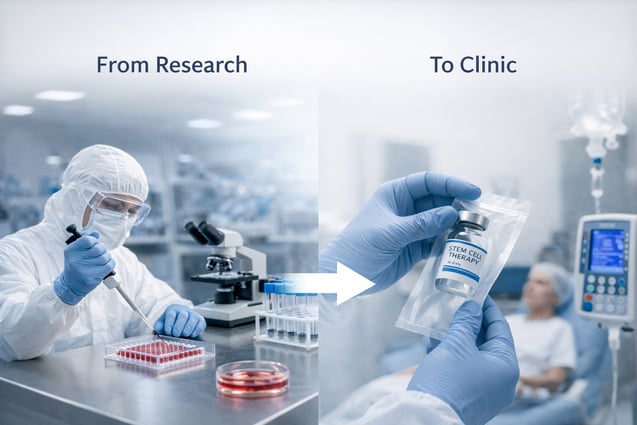
StemEdit is designed as a continuous platform, allowing projects to start with research-grade iPSC editing and transition seamlessly into GMP-aligned workflows using the same editing strategy, validated cell lines, and standardized documentation. This continuity helps reduce redevelopment time, streamline technology transfer, and support regulatory readiness for clinical applications.
3. Can StemEdit support the development of hypoimmune iPSC lines?
Yes. StemEdit has been used to generate hypoimmune iPSC lines through targeted gene knockouts (HLA Class I & II ) that reduce immune recognition, supporting allogeneic cell therapy development.
4. Where are StemEdit Gene Editing Projects Performed?
Projects can be conducted at REPROCELL's facilities in the United States and Japan, including GMP manufacturing environments to support clinical development and regulatory requirements.
E. Licensing Information
1. Are StemEdit gene‑editing services license‑free?
Yes, StemEdit services are provided license‑free. Customers may use REPROCELL’s gene‑editing platform and associated technologies without a separate license. Any third‑party licensing would relate only to specific genes, gene combination, targets, or applications chosen by the customer, not to REPROCELL’s platform.
2. Is REPROCELL’s landing‑pad technology license‑free?
Yes, the landing‑pad technology is also offered license‑free. Customers may use the platform without a separate license; any intellectual‑property or third‑party licensing considerations would be tied to specific genes, gene combination, custom integrases, constructs, or therapeutic applications rather than the landing‑pad technology itself.
Last Updated: June 2026
.png?width=756&height=425&name=hubspot_featured_image_1200x628%20(1).png)