StemEdit Gene Editing Services

Case Study in AI-Designed Gene Editing

Contact our experts

AI-Enhanced Genome Editing: What’s New

Ready-to-use StemEdit Hypoimmune Lines

Optimizedfor Reduced Immunogenicity and Allogeneic Compatibility

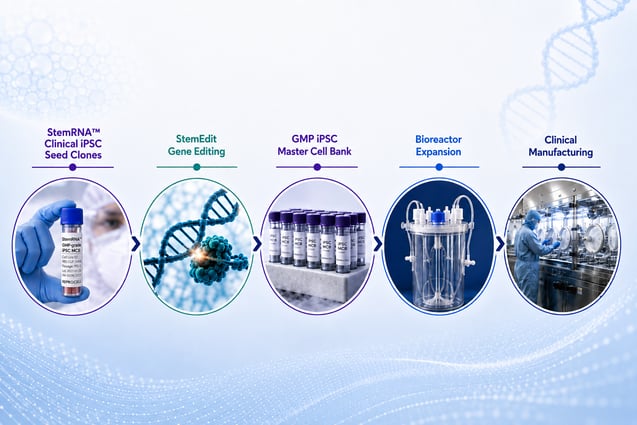
REPROCELL’s StemEdit Hypoimmune iPSC lines will be immediately available, can be evaluated under research conditions, and allow you to easily progress to clinical translation. Built on one of our StemRNA™ Clinical iPSC Seed Clones, these lines are generated using our proprietary genome editing system and reprogrammed with footprint-free StemRNA™ technology under GMP principles.

Hypoimmune StemEdit Lines

  • HLA Class I/II Double Knockout
    StemEdit Human iPSC non-HLA Class I/II (B2M/CIITA Homo Double KO)
  • HLA Class I Knockout
    StemEdit Human iPSC non-HLA Class I (B2M Homo KO)
  • HLA Class II Knockout
    StemEdit Human iPSC non-HLA Class II (CIITA Homo KO)

We also offer GMP iPSC Master Cell Bank (MCB) vials derived from the parental iPSC line as an affordable starting point for your own clinical gene editing projects and custom Hypoimmune line generation.

For detailed specifications, pricing, or to discuss your project needs, contact us at info-us@reprocell.com.

Key Benefits

  • Standardized, well-characterized genetic modifications
  • Immediate availability for research programs
  • Clear pathway to matched clinical-grade seed clones
  • GMP-aligned development and traceability
  • Ready for both research use and clinical translation

Our off-the-shelf lines provide speed for your research program without closing the door on future clinical development.

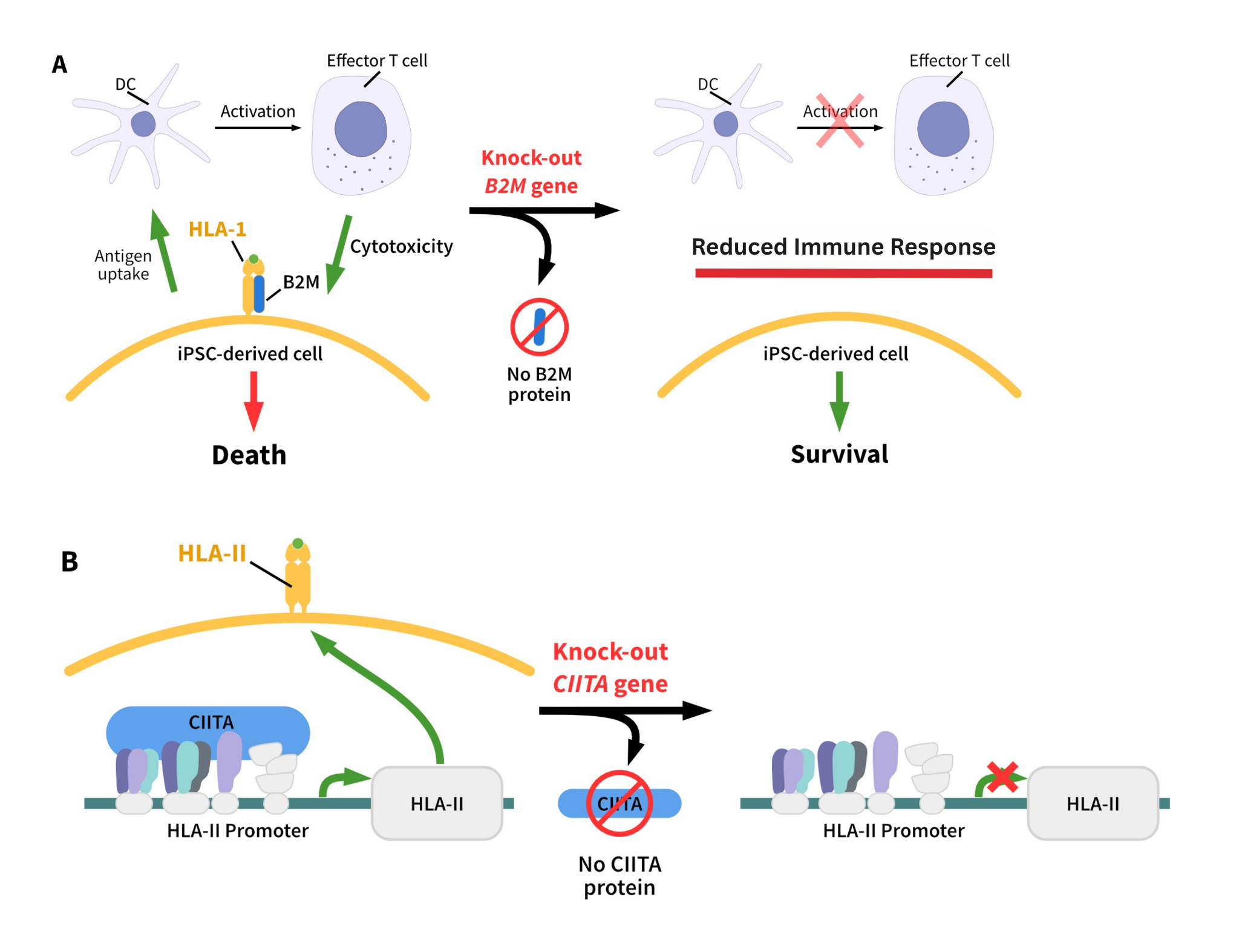
Outline: Modulation of Immune Response by Editing HLA Class I and Class II

One limitation of using iPSCs clinically is immunogenicity caused by Human Leucocyte Antigen (HLA) mismatching, which can reduce the in vivo survival and therapeutic efficacy of these cells.1,2 The immunogenicity of iPSCs can be reduced by disrupting the genes responsible for immune recognition using StemEdit's advanced gene editing platform. One approach is to knock-out the B2M (β2 microglobulin) and CIITA (major histocompatibility complex [MHC] II transactivator) genes, creating the basis for the generation of hypoimmune cell lines.  

In humans, the B2M protein is required for the presentation of HLA protein A-G on the cell surface, while CIITA is essential for HLA-II transcription.2,3 Dual knock-out of the B2M and CIITA genes disrupts the presentation of MHC-I/MHC-II proteins in iPSCs, improving their therapeutic potential while maintaining pluripotency.1

Hypoimmune lines updated figure

Role of B2M and CIITA in the regulation of the immune response. B2M regulates the activation of effector T cells. B2M knockouts do not activate effector T cells, leading to a reduced immune response. CIITA regulates the expression of the HLA-II complex. Knockout of CIITA leads to a reduced expression of HLA-II, and a reduced immune response.

Case Study: Hypoimmune iPSC Generation

Clinical Stem Cells - B2M CIITA Knock Out Macrophages

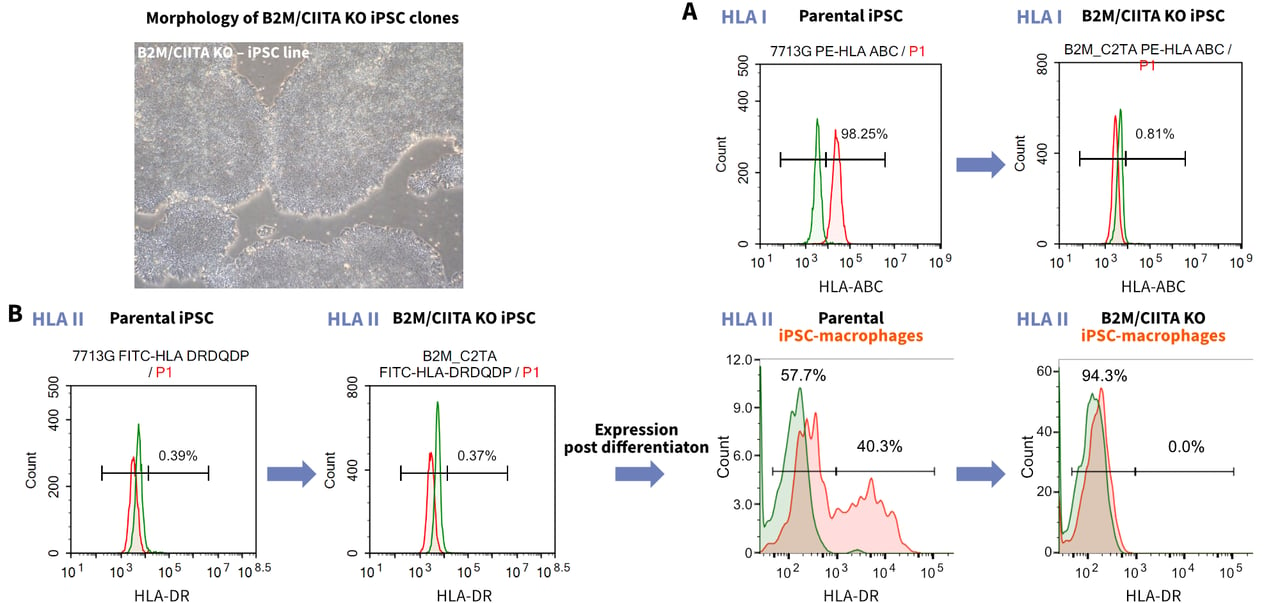
HLA Class I and II expression in B2M/CIITA double knock-out iPSCs. HLA expression was measured by flow cytometry in the unedited parental iPSC line and after knock-out of the B2M and CIITA genes. Expression of HLA I and II is suppressed in B2M/CIITA knockout lines. Results indicate that the generation of iPSC for the purpose of suppressing an immune rejection is successful with StemEdit.

(A.) HLA Class I expression was measured in the parental iPSC-derived macrophages by flow cytometry.

(B.) Undifferentiated iPSCs (“Parental iPSCs”) do not express HLA II. Expression of HLA Class II occurs only in cells post differentiation. Expression of the HLA II gene HLA-DR was therefore measured in iPSC-derived macrophages.

Contact our experts