
The genome-editing field has entered a new era with the public release of OpenCRISPR-1, the first gene-editing enzyme entirely created with large language models (LLMs) trained on extensive natural CRISPR-Cas data, resulting in a novel, synthetic editor distinct from any known natural CRISPR system. By moving from traditional discovery-based approaches to AI-enabled de novo design, researchers have unlocked access to sequence space far beyond nature’s constraints with promising implications for cell therapy, stem cell research, and therapeutic development (Christos Evangelou, 2024).
Key Terms You’ll Encounter
Before we go deeper into OpenCRISPR-1 and its implications, here’s a quick reference you may want to keep handy:
Table 1. Reference table explaining key acronyms used throughout this blog.
| Acronym | Full Form | Definition & Context |
| PAM | Protospacer Adjacent Motif | A short DNA sequence required immediately adjacent to a CRISPR target site that CRISPR-associated proteins (like Cas9) recognize before cutting. PAM sequences (e.g., 5’-NGG-3’ for SpCas9) are essential for distinguishing target DNA from non-target DNA in gene editing. |
| LLM | Large Language Model | “LLM” refers to an advanced Large Language Model, a type of AI (like GPT) used to assist with design, prediction, or analysis, which can be used in CRISPR workflows — for example, helping automate CRISPR experimental design. |
| RNP | Ribonucleoprotein | A complex of a Cas nuclease (e.g., Cas9 protein) bound to a guide RNA (gRNA or sgRNA). In CRISPR gene editing, delivering the CRISPR system as RNPs enables faster editing with reduced off-target effects compared to DNA or RNA delivery formats. |
| SpCas9 | Streptococcus pyogenes Cas9 | The most commonly used Cas9 nuclease derived from Streptococcus pyogenes. It recognizes a specific PAM (5’-NGG-3’) and introduces a double-strand DNA break at target sites to enable editing. |
Why OpenCRISPR-1 Matters
- From “discovery” to “design”: Traditional CRISPR tools (e.g., the canonical SpCas9) are repurposed bacterial proteins. OpenCRISPR-1, in contrast, is generated from scratch using large-scale protein language models (profluent.bio, 2025).
- Expanded sequence diversity: OpenCRISPR-1 is reported to be over 400 amino-acid mutations away from SpCas9, and roughly 200 mutations away from any known natural CRISPR-associated protein (profluent.bio, 2025). That means it is not simply a variant - it's a new editor, opening improved specificity, reduced immunogenicity, or other desirable properties.
- Potential for improved performance: Early reports indicate that OpenCRISPR-1 achieves high editing efficiency in human cells while substantially reducing off-target activity and immunogenicity compared to natural CRISPR systems (Ruffolo et al., 2025).

What’s Under the Hood: How OpenCRISPR-1 Was Designed
1. Massive data collection: Researchers mined 26.2 terabases of assembled microbial genomes and metagenomes, identifying over 1 million CRISPR–Cas operons to build the comprehensive “CRISPR–Cas Atlas”.
2. Training protein language models (LLMs): The LLMs were trained on this vast dataset to learn the “sequence-to-function” mapping of Cas proteins (i.e., what features make a functional Cas nuclease). The size of the dataset is critical for the LLM efficiency.
3. De novo generation of Cas-like protein: The model generated millions of candidate sequences, expanding the diversity of Cas-family proteins ~4.8-fold compared to natural proteins from the CRISPR-Cas Atlas.
4. Filtering & experimental validation: From the generated pool, a subset was selected via computational filters (folding, stability, activity prediction), synthesized, and functionally tested in human cells. Among those, OpenCRISPR-1 emerged as the top performer.
5. Guide-RNA design: In parallel, AI-models were also used to design compatible synthetic sgRNAs for these novel Cas proteins, ensuring efficient editing (Ruffolo et al., 2025).Because of this pipeline (Figure 1B): data → model → generation → filtering → validation - OpenCRISPR-1 retains the familiar architecture of a Type II Cas9 nuclease yet is highly divergent at the sequence level.
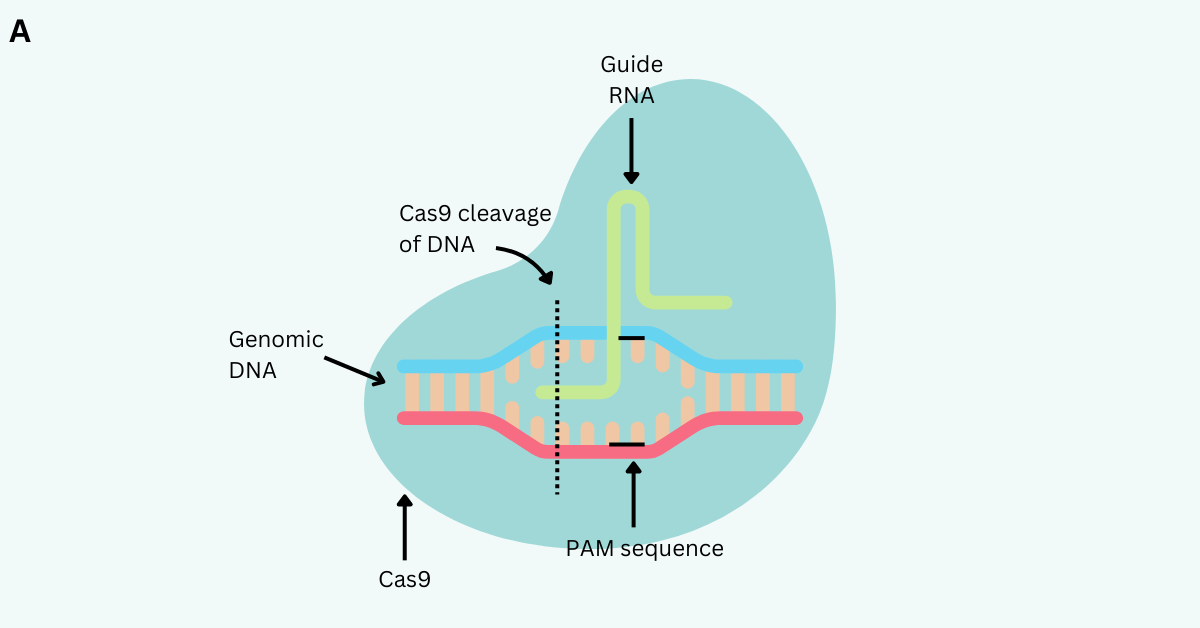
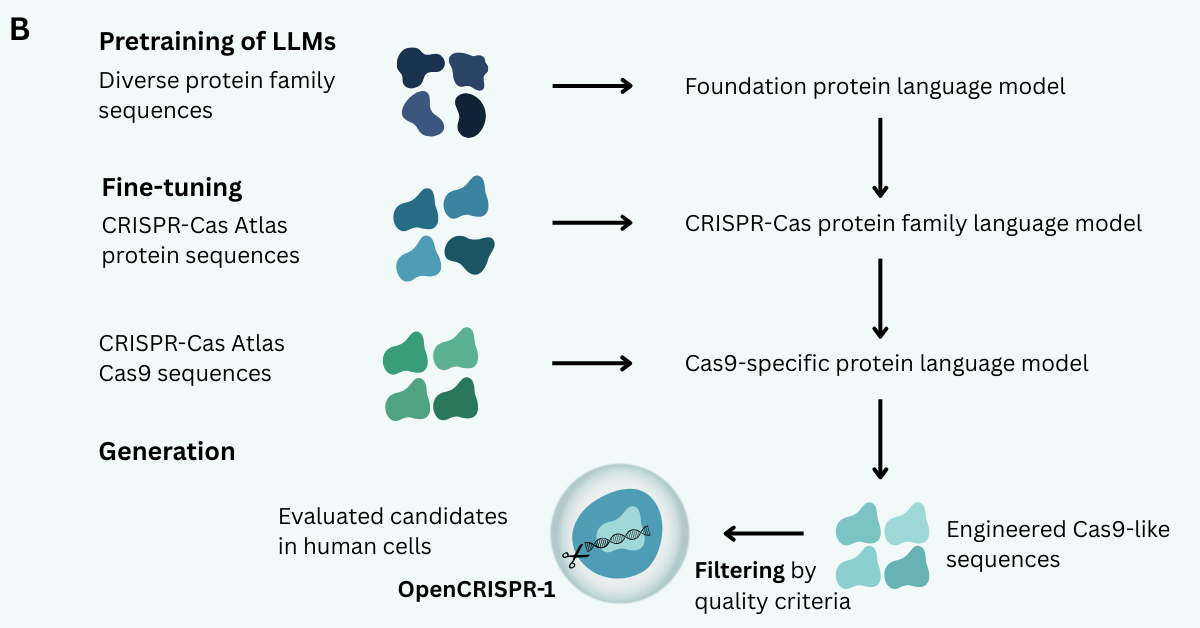
Figure 1. The designing of OpenCRISPR-1.
A. Features of the CRISPR-Cas9 system. In the canonical CRISPR-Cas9 system, a guide RNA (gRNA) directs the Cas9 nuclease to a complementary DNA target, and Cas9 only binds and cleaves when a specific protospacer adjacent motif (PAM) is present immediately adjacent to the target site, ensuring precise genome editing.
B. AI-driven design of OpenCRISPR-1. Large language models (LLMs) are first pretrained on a diverse, evolution-wide set of protein sequences - enabling them to learn general constraints of protein evolution and then fine-tuned with CRISPR/Cas (nuclease + nucleic acid) data to generate novel, functional Cas-like proteins such as OpenCRISPR-1.
Potential Impact & Applications for Research and Therapeutics
OpenCRISPR-1 opens up exciting opportunities for scientists, biotech companies, and pharma developers working on cell therapy, regenerative medicine, or gene therapy:
✓ Broader targeting scope: Novel PAM preferences or altered DNA-binding properties may allow editing of genomic sites previously inaccessible to natural Cas enzymes.
✓ Improved safety & specificity: Lower off-target activity and reduced immunogenicity make OpenCRISPR-1 especially attractive for clinical applications and cell therapies.
✓ Custom “designer” editors: The AI-design platform can be leveraged to create custom nucleases (or base/prime editors) optimized for specific cell types, therapeutic contexts, or delivery constraints (e.g., viral vectors, mRNA, RNPs).
✓ Platform scalability & democratization: Since the tool, datasets, and sgRNA design models are open-source (or available under license), academic labs and small biotech firms can adopt cutting-edge editing tools without heavy patent/licensing restrictions.
✓ Accelerated therapeutic development: For pipelines involving ex vivo engineering (e.g., CAR-T, stem cell modification), OpenCRISPR-1 could reduce off-target risks and improve safety profiles, helping bring research to clinic faster.
Challenges & Critical Considerations
While OpenCRISPR-1 is a huge leap forward, there remain important caveats and constraints:
- Experimental validation is essential: Success in initial human cell experiments is promising, but performance may vary depending on cell type (primary cells, stem cells), chromatin state, DNA repair pathways, or epigenetic environment.
- Delivery remains a bottleneck: The size, expression, delivery (viral vectors, RNPs, lipid nanoparticles), and toxicity constraints typical of CRISPR-based systems still apply. AI-design alone does not solve those classical challenges.
- Regulation, safety & ethics: Even though OpenCRISPR-1 is open-source, any therapeutic or in vivo application must undergo rigorous biosafety evaluation, preclinical testing, immunogenicity assessment, and comply with regulatory frameworks.
- Unknown long-term effects: As a synthetic, highly divergent protein, long-term stability, immunogenicity, insertional mutagenesis risk, and off-target consequences need thorough investigation.
- Community acceptance & trust: Since OpenCRISPR-1 departs from natural enzymes, broad adoption will likely depend on peer-reviewed studies, reproducibility of results, and transparent reporting across labs.
What OpenCRISPR-1 Means for Researchers & Developers
For scientists and developers in cell therapy, gene therapy, stem-cell engineering, or genome-editing R&D, OpenCRISPR‑1 represents a paradigm-shifting, AI-designed gene editor - potentially accelerating preclinical development, enhancing editing specificity, and enabling bespoke editing workflows.
Scientists now have access to a designer Cas9-like nuclease with comparable (or better) performance than SpCas9, but fundamentally novel sequence - a powerful “chassis” for tailored editing. For preclinical or translational pipelines, OpenCRISPR-1 could accelerate editing workflows, including base editing, multiplex editing, or therapeutic gene correction - with potentially fewer side effects than natural Cas9 systems. As an open-source platform, it lowers entry barriers for researchers or smaller biotech — enabling democratized innovation, custom nuclease/gRNA design, and adaptation for bespoke applications. However, as always, success demands careful validation, rigorous quality control, and cautious translational planning.
References
- Evangelou C. OpenCRISPR-1: Generative AI Meets CRISPR. CRISPR Medicine News (2024).
- Ruffolo JA, Nayfach S, Gallagher J, et al. Design of highly functional genome editors by modelling CRISPR-Cas sequences. Nature 645(8080):518-525, (2025).

About the author
Dayana Ivanova, Marketing and Business Administration, Stem Cells
Dayana combines her strong Medical Sciences background with her growing enthusiasm for digital marketing. She’s passionate about blending her scientific expertise with creative content development, making complex topics accessible and engaging. Outside of work, you’ll find Dayana staying active, traveling, and immersing herself in diverse cultures and cuisines. Connect with Dayana on LinkedIn: linkedin.com/in/dayanaivanova
Subjects we write about
- 3D Cell Culture
- Cell Culture
- Central Lab Services
- Clinical Capabilities
- Disease Modeling
- Drug Discovery
- Gene Editing
- Genomic Services
- GMP
- Human Tissue Samples
- Human Tissue Testing
- IBD
- Life Sciences
- Master Cell Banks
- Neurons
- Oligonucleotide Synthesis
- Pharmacology-AI
- Precision Medicine
- Product Catalog
- Regenerative Medicine
- Respiratory Disease
- Safety Pharmacology
- Skin Disease
- Stem Cells