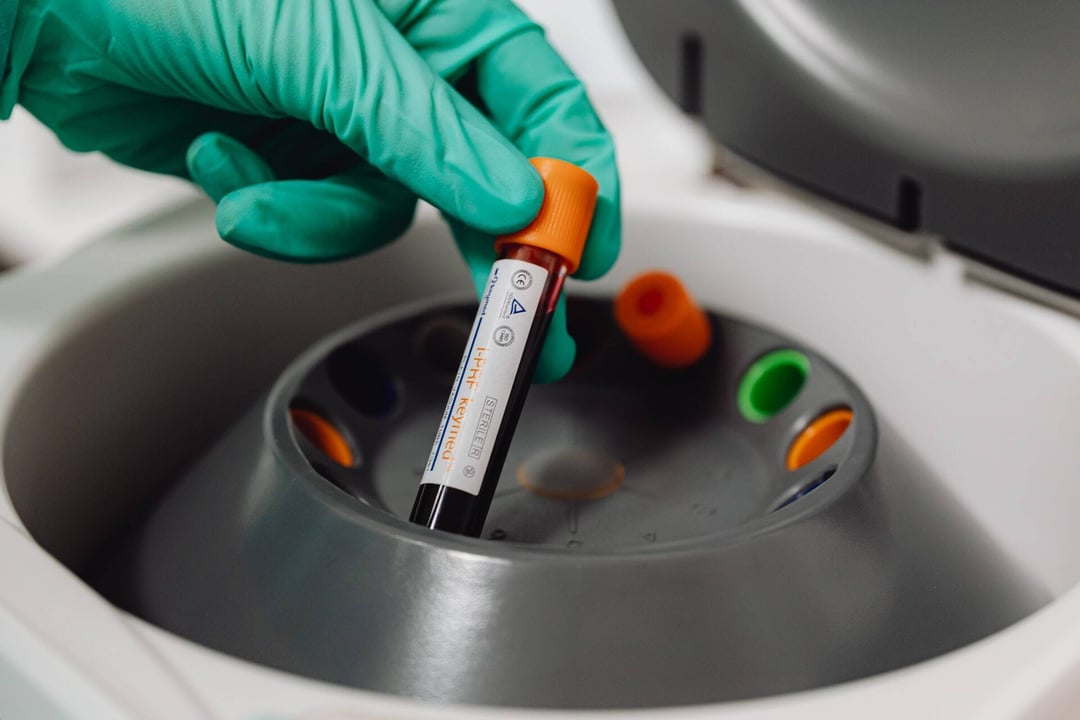
Peripheral Blood Mononuclear Cells (PBMCs) are now recognised as one of the most valuable human-derived model systems in modern drug development. Comprising key immune cell populations—including T cells, B cells, natural killer (NK) cells, and monocytes—PBMCs provide a clinically relevant window into human immune biology and therapeutic response.1 Their ability to reflect complex immunological mechanisms in a human context has made them increasingly important across both preclinical and clinical research.1, 2
As the pharmaceutical industry continues to invest in immuno-oncology, cell and gene therapy, precision medicine, and advanced biologics, demand for robust translational models has accelerated. PBMCs offer a practical and biologically meaningful platform for assessing mechanism of action, immune activation, safety liabilities, biomarker response, and patient-specific variability.1, 3, 4 Their accessibility, translational relevance, and compatibility with advanced analytical technologies position them as strategic tools for de-risking development programmes and improving decision-making across the drug development pipeline.
PBMCs as Human-Relevant Translational Models
A key advantage of PBMCs is that they are isolated directly from human blood, enabling researchers to study human-specific immune mechanisms with greater translational relevance than many conventional preclinical systems. In contrast to animal models and immortalised cell lines—which often fail to capture the complexity and heterogeneity of human immunity—PBMCs provide a more predictive platform for understanding how candidate therapeutics may behave in patients.5
Because PBMC preparations contain a diverse mix of immune cell subsets, they enable investigation of immune activation, cytokine secretion, cell–cell signalling, inflammatory pathways, and functional immune responses in vitro.1 This makes them especially valuable in therapeutic areas where immune biology is central, including oncology, infectious disease, autoimmune disorders, inflammation, and vaccine development.4, 6
Role in Immunotherapy and Advanced Therapeutic Development
The growth of immunotherapy has further elevated the importance of PBMCs in pharmaceutical research. Therapeutic modalities such as monoclonal antibodies, checkpoint inhibitors, bispecifics, CAR-T cell therapies, and cancer vaccines all depend on accurate assessment of immune-cell behaviour. PBMC-based assays provide an efficient means of characterising how immune cells respond to these interventions before clinical testing begins.3, 4, 7
Using PBMCs, researchers can evaluate T-cell activation, cytokine release, immune suppression, proliferation, and cytotoxic function following exposure to investigational therapies. These data are critical for demonstrating biological activity, clarifying mechanism of action, and identifying potential efficacy signals early. PBMC assays are particularly relevant for therapies targeting immune checkpoints such as PD-1 and PD-L1, as well as other immunomodulatory pathways where functional human immune readouts are essential.4, 6
PBMCs also play a foundational role in the development of cell and gene therapies. They are frequently used for immune-cell engineering workflows, ex vivo functional assessment, and potency evaluation, particularly in CAR-T and other adoptive cell therapy programmes.3 As next-generation therapeutics become increasingly personalised and mechanistically complex, PBMCs remain central to translational strategy and assay development.
Importance in Biomarker Discovery and Translational Medicine
PBMCs are widely used in biomarker discovery because they can be obtained through minimally invasive blood collection and sampled repeatedly over the course of a study. This makes them particularly well suited to longitudinal clinical monitoring, pharmacodynamic assessment, and translational research programmes designed to track how patients respond to therapy over time.
A wide range of analytical technologies can be applied to PBMCs, including flow cytometry, RNA sequencing, single-cell transcriptomics, multiplex cytokine profiling, and multi-omics approaches.5, 8 These tools support the identification of predictive, prognostic, and pharmacodynamic biomarkers that can inform patient selection, stratification, dose optimisation, and treatment monitoring.
From a commercial and clinical development perspective, this longitudinal accessibility is highly valuable. PBMC-based biomarker strategies can help sponsors generate richer translational datasets, strengthen go/no-go decisions, and improve the probability of clinical success by linking biological response to patient outcome.2, 4
PBMCs in Drug Safety and Immunotoxicity Assessment
Safety assessment remains one of the most critical stages of drug development, particularly for immunomodulatory agents and biologics. PBMC-based assays play a key role in identifying immune-related toxicities, including excessive immune activation and pro-inflammatory responses that may translate into clinically significant adverse events such as cytokine release syndrome.
The importance of human immune-cell testing was brought into sharp focus by the 2006 TGN1412 first-in-human trial. Subsequent work has shown that PBMC-based cytokine release assays can provide a more sensitive and clinically informative approach for evaluating certain immune activation risks than conventional whole-blood formats.9
Today, PBMC-based cytokine release assays are widely used in preclinical immune safety assessment and continue to evolve through more advanced in vitro models and assay standardisation efforts. Their use supports earlier hazard identification, more informed candidate selection, and stronger risk mitigation strategies ahead of first-in-human studies.
Contribution to Personalised Medicine
PBMCs also support the advancement of personalised medicine by enabling researchers to characterise patient-specific immune responses.5, 6, 8 Because therapeutic outcomes are often shaped by genetic, molecular, and immunological variability, PBMC-based testing can help distinguish responder from non-responder populations and reveal biologically meaningful differences between patient groups.
This is particularly important in immuno-oncology and autoimmune disease, where patient selection is closely linked to therapeutic success. PBMC-derived data can support stratification strategies, companion diagnostic development, and more targeted clinical trial design—helping move development programmes toward treatments that are not only innovative, but more precisely matched to the right patients.
Integration with Advanced Analytical Technologies
The value of PBMCs has expanded significantly with the rise of advanced analytical technologies. Single-cell sequencing enables high-resolution analysis of individual immune-cell populations, while integrated multi-omics approaches—including transcriptomics, proteomics, genomics, and epigenomics—provide deeper insight into therapeutic mechanism and biological response.5, 8
In parallel, functional assays such as ELISpot, proliferation studies, cytotoxicity assays, and cytokine release testing continue to provide actionable readouts of immune function. Together, these capabilities have transformed PBMCs into a powerful translational platform for discovery, development, and clinical interpretation.
Advantages and Practical Considerations
PBMCs offer several practical and scientific advantages. They are obtained through minimally invasive blood collection, enabling serial sampling in both healthy volunteers and patient populations. Because they are human-derived, they provide stronger clinical relevance than many traditional preclinical models.
At the same time, PBMCs are not without limitations. Donor-to-donor variability can affect reproducibility, ex vivo viability is finite, and PBMC assays do not fully replicate tissue microenvironments. For this reason, PBMC studies are often most powerful when integrated with complementary models.5
Conclusion
Peripheral Blood Mononuclear Cells have become indispensable to modern drug development because they deliver clinically relevant insight into human immune function. Their applications span immunotherapy development, biomarker discovery, immune safety testing, personalised medicine, and translational research.
As drug development becomes increasingly targeted, data-rich, and patient-centric, the role of PBMCs will continue to expand. PBMC-based platforms are helping organisations reduce risk, improve biological understanding, and accelerate the development of safer, more effective therapies.
References
1. Betsou, F., Gaignaux, A., Ammerlaan, W., Norris, P. J. & Stone, M.Biospecimen Science of Blood for Peripheral Blood Mononuclear Cell (PBMC) Functional Applications. Curr. Pathobiol. Rep. 7, 17–27 (2019).
2. Alexovič, M., Uličná, C., Sabo, J. & Davalieva, K. Human peripheral blood mononuclear cells as a valuable source of disease‐related biomarkers: Evidence from comparative proteomics studies. Proteomics Clin. Appl. 18, (2024).
3. Ballesteros-Ribelles, A., Millán-López, A., Carmona-Luque, Md. & Herrera, C. Granulocyte Colony Stimulating Factor-Mobilized Peripheral Blood Mononuclear Cells: An Alternative Cellular Source for Chimeric Antigen Receptor Therapy. Int. J. Mol. Sci. 25, 5769 (2024).
4. Bacot, S. M. et al. Exploring the Potential Use of a PBMC-Based Functional Assay to Identify Predictive Biomarkers for Anti-PD-1 Immunotherapy. Int. J. Mol. Sci. 21, 9023 (2020).
5. Heath, J. R., Ribas, A. & Mischel, P. S. Single-cell analysis tools for drug discovery and development. Nat. Rev. Drug Discov. 15, 204–216 (2016).
6. De Rosa, C. et al. PBMCs as Tool for Identification of Novel Immunotherapy Biomarkers in Lung Cancer. Biomedicines 12, 809 (2024).
7. Shehata, H. M., Dogra, P. & Sanjabi, S.Immune Monitoring during Cancer Immunotherapy. in Manual of Molecular and Clinical Laboratory Immunology 1144–1167 (Wiley, 2024). doi:10.1002/9781683674023.ch105.
8. Oelen, R. et al. Single-cell RNA-sequencing of peripheral blood mononuclear cells reveals widespread, context-specific gene expression regulation upon pathogenic exposure. Nat. Commun. 13, 3267 (2022).
9. Vessillier, S. et al. Cytokine release assays for the prediction of therapeutic mAb safety in first-in man trials — Whole blood cytokine release assays are poorly predictive for TGN1412 cytokine storm. J. Immunol. Methods 424, 43–52 (2015).