StemEdit iMSC B2M/CIITA DKO ReproMSC14
RCRP057
Brand: StemRNA™
ReproMSC14 are ready-to-use, research-grade Human iMSCs generated from one of our StemRNA™ Clinical Lines, RPC-LLF-34-F3. The parental iPSC line was established from fibroblasts using the StemRNA Reprogramming Technology that was subsequently engineered with biallelic knockouts of B2M and CIIT, key regulators of HLA Class I and Class II antigen presentation.
Currency:
| Product name | Catalog number | Pack size | Price | Price (USD) | Price (GBP) | Price (EUR) |
|---|---|---|---|---|---|---|
| StemEdit iMSC B2M/CIITA DKO ReproMSC14 | RCRP057 | 1 × 10⁶ cells | (select above) | $ 1900 | £ Ask us | € Ask us |
Note: prices shown do not include shipping and handling charges. To get a quote, make an inquiry.
Product Information
Recommended Products
Hypoimmune Human iPSC-derived MSCs with B2M and CIITA Double Knockout
Repro MSC14 are ready-to-use iPSC-derived mesenchymal stem cells (iMSCs) generated from StemEdit hiPSC B2M/CIITA DKO (Cat. No. RCRP052), a gene-edited version of one of our StemRNA™ Clinical Lines, RPC-LLF-34-F3. The analogous wild-type iMSCs line (Repro MSC10 iPSC-derived MSCs (iMSCs), Phenol Red-Free, Cat. No. RCRP038) is also available.
ReproMSC14 cells do not contain Phenol Red, making them ideal for exosome research.
iPSC-derived MSCs, sometimes called iMSCs, offer several advantages over primary MSCs, including a renewable cell source, enhanced scalability, greater batch-to-batch consistency, high proliferative capacity, and suitability for genetic engineering. Find out more about their potential therapeutic advantages in our recent blog post "The Therapeutic Advantage of Induced Pluripotent Stem Cells-Derived Mesenchymal Stem Cells (iMSCs)".
ReproMSC14 cells feature:
- Easy access to hypoimmune MSCs from a reproducible source.
- Immediate thawing into Phenol Red-free MSC NutriStem XF Culture medium (Cat. No. 01-0007) on vitronectin or NutriCoat™ Attachment Solution (Cat. No. 05-0063) with easy conversion to other standard MSC Media.
NOTE:
These iMSC cell lines are developed and supplied for Research Use Only (RUO). They are not intended for clinical or therapeutic applications. However, the iPSC clone from which these iMSCs were derived has a clinical-grade iPSC counterpart that is suitable for clinical gene editing and downstream clinical development. If you require material for translational or clinical programs, please see Clinical Stem Cell Services or Contact Us for more information.
See also our complete collections of Research Use Only ReproMSC iPSC-derived MSCs (iMSCs) and StemEdit Gene-Edited iPSC Lines.
Table: Characteristics of StemEdit iMSC B2M/CIITA DKO ReproMSC14 RPC-LLF-34-F3 Cells
| Cat. No.: | RCRP057 |
| Mutation: | B2M/CIITA double knockout |
| Mutation validation: |
DNA Sequencing, B2M expression (flow) |
| Parent Clone ID: |
StemEdit hiPSC B2M/CIITA DKO (Cat. No. RCRP052), which were derived from StemRNA Clinical iPSC Clone LLF-34-F3 |
| Donor Blood Type: |
O positive |
| Donor Race: | Caucasian |
| Donor Sex: | Female |
| Donor Age: | 22 |
| Reprogramming Technology: | StemRNA Clinical Reprogramming Technology |
| Tissue Source: | Skin (Fibroblasts) |
| Karyotype: | Normal (46 XX) |
| Microbiology: | Negative for bacteria, virus, and mycoplasma |
Figure: Expression of MSC Markers in ReproMSC14 Cells.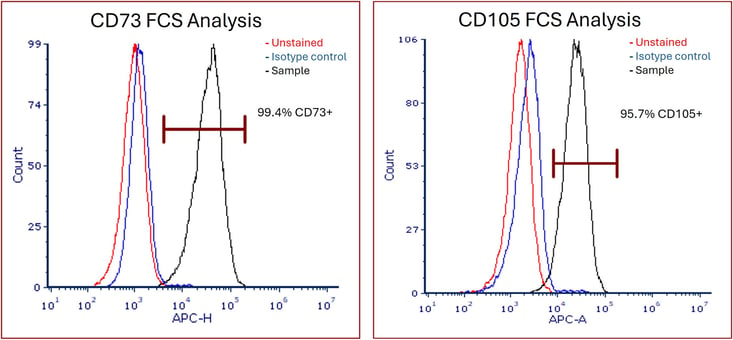
The Role of B2M and CIITA
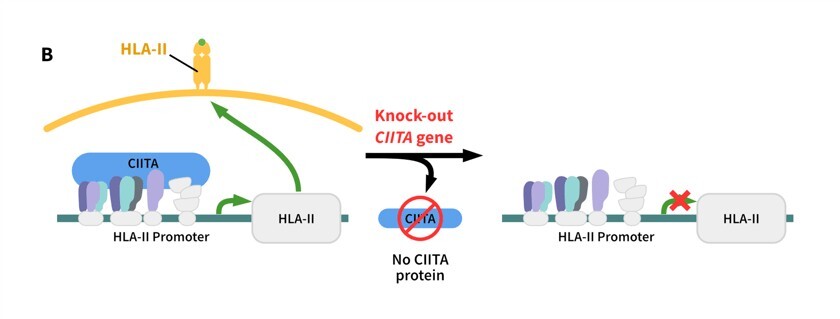
In humans, the B2M protein is required for the presentation of HLA proteins A-G on the cell surface. Disruption of the B2M gene reduces T-cell activation and interferes with the T-cell-mediated immune response through inhibition of Class I HLA signaling. CIITA regulates the expression of the HLA Class II complex. Knocking out CIITA leads to reduced activity of HLA Class II and suppression of the immune response.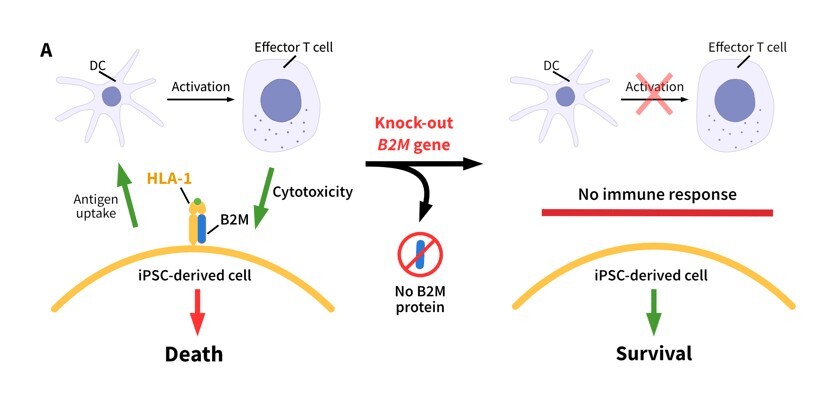
Explore our StemEdit Research iPSCs.
Stemgent and the StemEdit brand name are trademarks of REPROCELL Inc., Japan.